Showing posts with label Abraham Maslow. Show all posts

Saturday, November 18, 2017

George Soros Polysocio-economics philosophy

George Soros/Political, social, and economic philosophy

George Soros.jpg
George Soros is a wealthy, progressive political activist who seeks to attain his ideal of open society through donating to and founding political and social organizations that enact and encourage national and global change.
This page concerns the philosophy behind Soros' political and philanthropic activity. Soros is guided by Karl Popper's notion of an open society and by his own economic theory of reflexivity.
To read more about Soros' career, political activity, and other work, click here.

Open society

Soros' political and philanthropic activity has been influenced by his belief in an idea of open society, a concept put forth by Karl Popper. Soros himself says, "In my definition an open society is an imperfect society that holds itself open to improvement."[1] Soros studied Popper’s theory of open society while attending the London School of Economics. He wrote the following about Popper's philosophy on open societies:[2]
George Soros speaks about the concept of Open Society
“ Popper argued that the empirical truth cannot be known with absolute certainty. Even scientific laws can’t be verified beyond a shadow of a doubt: they can only be falsified by testing. One failed test is enough to falsify, but no amount of conforming instances is sufficient to verify. Scientific laws are hypothetical in character and their truth remains subject to testing. Ideologies which claim to be in possession of the ultimate truth are making a false claim; therefore, they can be imposed on society only by force. This applies to Communism, Fascism and National Socialism alike. All these ideologies lead to repression. Popper proposed a more attractive form of social organization: an open society in which people are free to hold divergent opinions and the rule of law allows people with different views and interests to live together in peace.[3] Having lived through both Nazi and Communist occupation here in Hungary I found the idea of an open society immensely attractive.[4] ”
Although Soros adopted Popper's notion of an open society, he later published an essay in 2011 criticizing aspects of Popper's concept:[5]
“ The war on terror forced me to reconsider the concept of open society. My experiences in the former Soviet Union had already taught me that the collapse of a closed society does not automatically lead to an open one; the collapse may be seemingly bottomless, to be followed by the emergence of a new regime that has a greater resemblance to the regime that collapsed than to an open society. Now I had to probe deeper into the concept of open society that I had adopted from Karl Popper in my student days, and I discovered a flaw in it.
Popper had argued that free speech and critical thinking would lead to better laws and a better understanding of reality than any dogma. I came to realize that there was an unspoken assumption embedded in his argument, namely that the purpose of democratic discourse is to gain a better understanding of reality. It dawned on me that my own concept of reflexivity brings Popper’s hidden assumption into question. If thinking has a manipulative function as well as a cognitive one, then it may not be necessary to gain a better understanding of reality in order to obtain the laws one wants. There is a shortcut: 'spinning' arguments and manipulating public opinion to get the desired results. Today our political discourse is primarily concerned with getting elected and staying in power. Popper’s hidden assumption that freedom of speech and thought will produce a better understanding of reality is valid only for the study of natural phenomena. Extending it to human affairs is part of what I have called the 'Enlightenment fallacy.'[4]
”
Despite his criticism of Popper's ideology, Soros' continued belief in and dedication to the idea of open societies continues to spur him to support various social and political causes, especially his Open Society Foundations, in order to sustain open societies and help closed societies become open.

Economic reflexivity theory

George Soros speaks about his General Theory of Reflexivity
Soros developed an economic theory of reflexivity that he has said allowed him to anticipate the ebb and flow of financial markets. While he does not claim to have discovered the idea of reflexivity itself, he does claim to apply it to economics in a new way.[2]
Soros has stated the main idea of his theory as follows:[2]
“ I can state the core idea in two relatively simple propositions. One is that in situations that have thinking participants, the participants’ view of the world is always partial and distorted. That is the principle of fallibility. The other is that these distorted views can influence the situation to which they relate because false views lead to inappropriate actions. That is the principle of reflexivity. For instance, treating drug addicts as criminals creates criminal behavior. It misconstrues the problem and interferes with the proper treatment of addicts. As another example, declaring that government is bad tends to make for bad government.[4] ”
David J. Lynch wrote in a 2008 USA Today article, "In his latest work, The New Paradigm for Financial Markets: The Credit Crisis of 2008 and What It Means, Soros traces a straight line between today's financial turmoil and what he says are fatally flawed conventional assumptions about how markets behave. If banks, investors and regulators had embraced reflexivity years ago, there never would have been a financial crisis, Soros insists."[6]
In the same 2008 article, Lynch went on to summarize Soros' application of reflexivity to economics as follows:[6]
“ To Soros, the conventional approach is rubbish. Instead of a world of near-identical actors, coolly assessing their economic interests and acting with clear-eyed precision, he sees a world (and markets) governed by passion, bias and self-reinforcing errors. Because fallible human beings are both involved in, and trying to make sense of, this world, they inevitably make mistakes. Those mistakes then feed on themselves in 'reflexive' ways that, when taken to extremes, result in situations such as the now-deflating U.S. housing bubble. Standard economic theory is flawed, Soros says, because it treats markets populated by thinking human beings as if they operated according to the natural laws that govern atoms and molecules. Economists say Soros badly exaggerates the limitations of standard theory and ignores subsequent refinements. But if conventional economics teaches that markets are always (eventually) right, Soros insists they are always wrong.[4
  

  1. Footnotes


  2. GoergeSoros.com, "Interview with Harvey Blume," August 20, 2006

  3. Financial Times, "Soros: General Theory of Reflexivity," October 26, 2009

  4. Bolded emphasis added by Ballotpedia to highlight the meaning of the term open society.

  5. Note: This text is quoted verbatim from the original source. Any inconsistencies are attributed to the original source.

  6. GeorgeSoros.com, "My Philanthropy," accessed May 25, 2016

  7. USA Today, "Soros sees 'reflexivity' theory of economics as life's work," May 13, 2008

Thursday, December 4, 2014

Part Three: Maslow's Theorem-The Great Society (Poverty in the USA)


PART THREE: Maslow's Theorem-The Great Society (Poverty in the USA) (by: Paul Goree-work in progress 2014)

In Maslow's work, TOWARD A PSYCHOLOGY OF BEING (1962), Maslow provides the concepts upon which a perspective of human societal illness and health merge to provided insight into constraints of social mobility.  Maslow list 9 factors:

1.) We each have an essential biological based inner nature
2.) Each person's inner nature is in part unique to himself
3.) It's possible to study this inner nature scientifically
4.) The inner nature is not intrinsically evil-it is neutral or positive good
5.) Based on #4, it is best to seek behavior that encourage rather than suppress
6.) If the essential core of a person is suppress, it will seek subtle ways  of 
     expression/illness
7.) The inner nature is not strong and overpowering. It is weak and easily overcome by    
     habit, cultural pressure and wrong attitudes
8.) Even though weak, it rarely disappears-it persist for actualization
9.) These conclusion must be articulated with the necessity of discipline-they are desirable        experiences


From these 9 factors, Maslow concludes that the study of healthy people (physically and mentally) is a model by which self-fulfilling development can be obtained.  The possibilities of this development is based upon the essences of the inner nature as it expresses itself  "freely", rather than suppressed. This individual status has a collective result on the entire society. Each of us is a portion of the collective and create through our individual nature, a macro unconscious.  Maslow stated, "...every crime against one's own nature, every evil act...records itself in our unconscious and makes us despise ourselves..."  An individuals despising themselves, project upon society an illness, that effects the concept of collectives worth.

From Karen Horney, Maslow develop the notion that collective worth is recorded in the individuals unconscious. Horney uses the term "register" to explain the process by which the individual injures their inner nature. Horney stated, "If we do something we are ashamed of, it "registers" to our discredit and if we do something...good, it registers to our credit. The net result ultimately are either one or the other-either we respect and accept ourselves or we despise ourselves and feel contemptible, worthless and unlovable..." It thus becomes a duty of the collective to attend to this worthlessness, felt by the individual. This duty improves the lives of us and others.

We must be concerned at all times about the kind of individuals, the world creates. Seeming the inner nature seeks to actualize itself, it benefits society to collectively assist in this process. Maslow suggested that sick people (mentally and physically) are made ill and healthy by culture. "...sick individuals make their culture more sick and healthy individuals make their culture more healthy. Improving health is one approach to making a better world..." To improve a healthy society, we should look towards personal growth development strategies.

The extend an individual attempts to satisfy the physiological aspects of Maslow's lower level, can become a factor by which unhealthy mental and physical conditions can develop.  Stress is a main contributor to unhealthy conditions, by which chronic stress can cause heart problems, mental problems and eventually death if unattended. The worthiness an individual experiences, also has potential effects on the effort exerted. The importance of this effort within a competitive environment, also creates stress, leading to an sick individual.. This worthlessness has some limiting affects on the over all effort an individual is capable or willing to exert.  In her work So You Think I Drive A Cadillac. Karen Seccombe provides qualitative and quantitative data that suggest some  in need of social welfare are unwilling or hesitant to apply for it due to the stigma associated with public assistance. Many of the case studies Seccombe detail, are in Maslow's lower level of hierarchical need. The ideal of dis-empowering themselves due to societal stigma is a backwards step for a Great Society. By which a concept of "unconditional effort" should replace the false stigma associated with personal growth development. Unconditional effort, refers to rewarding and acknowledging, all and any effort an individual puts towards self development.

The ideal of effort is directly linked to compensation in a Capitalistic society. In Alfred Adler work, Adler studied gifted personalities and universalized the concept of compensation into basic law of human nature.  According to the Adlerian Theory, "challenges of illness, birth defects, poverty, or other toward circumstance in youth provide the stimulus for all higher achievement." This has a negative factor on the collective, as it bases self achievement competitively. Whereas in an "idyllic" society, "unconditional effort" embraces and rewards all levels of effort exerted. In a Great Society, the opportunity to encourage one another is a means of reducing the collective sickness.

Maslow's hierarchical levels are not exclusive to adults. In Greshman Sykkes and David Matza's work, the unattended physiological needs spill over into the decision making process of delinquents.  This spillage becomes a factor that effects the over all society as crime rates rise and the notions of self worth and growth erode. Sykes and Matza argued that delinquents do not have conventional values. Conventional society demands a civic expectation (not steal, covet, kill, etc) of co-existences. However these youth inhabit a sub-culture where the values are not supported. These delinquents develope guilt and shame, as they attempt to exist within an environment that sometimes requires violations of the social norm.  They justify their behavior through rationalizing, which neutralizes their potential guilt, before the law is broken. Sykes and Matza termed this process, "techniques of neutralization", which focused upon:

1.) Denial of responsibility
2.) Denial of injury
3.) Denial of the victim
4.) Condemnation of the condemner

All of these factors lead to a collective societal illness, which hampers the validity of  a Great Society. Recently actions were taken by investment brokerage - Goldman Sach, to help the city of Boston reduce crime and recidivism among, first time offenders. Goldman Sachs executives analyzed the circumstances of criminal activity and determined that they could effectively administrate Boston's crime, resulting in a lower recidivism and empowered prior "criminals", who then would be integrated successfully into society. This integration attends to the physiological needs that Maslow details. Goldman Sach, invested in a non-profit organization ROCA, whose objective for the past 26 years has been to transition young male criminals from the streets to the "legitimate economy". Actions such as this, contribute to curing the sickness of society, regarding delinquency and criminal activity.

Sometimes the sickness of society is one that is a direct financial burden. Consider the financial stress placed upon parents and grammar school students unable to attend, a civic class/social studies/American government class, field trip to Washington D.C.  In a Great Society, education of the youth is the end result of our future. At no extent should cost be cut or opportunities be limited. Especially due to economic disadvantages. It seems unjust to stratify grammar students with economical variances. It also seems unjust to place that financial burden upon the parent (s). Under most conditions, families at the lower level of Maslow's hierarchical diagram, are below the poverty level. In some instance, public grants are available in some states for those that meet income requirements. However, a greater portions of the families at the lower level, are working families at the poverty level or slightly above. The poverty line in the United State 2013 was $15, 510 for a family of 2 and $23, 550 for a family of 4 (HHS, 2013).

As I continue to analyze Maslow's Hierarchical Theory of Needs, I will focus on the cost expenditure of social programs that attempt to lead our nation to a Great Society. I will continue to analyze Social Democracy in the United States, as it may have varying effects upon our economic system.


REFERENCES:

Deprez, E. Esme.(2014).Goldman Sachs Bets on Reducing Crime. Businessweek. Retrieved from http://www.businessweek.com/articles/2014-05-08/goldman-sachs-backs-social-impact-bond-for-nonprofit-roca

Hillman, James.(1996). The Soul Code. Grand Central Publishing. NYNY

Maslow, Abraham.(2012). Toward A Psychology of Being. Start Publishing LLC


Seccombe, Karen.(2011). So You Think I Drive A Cadillac. Allyn and Bacon. NYNY


    UNM.(2010). Neutralization Theory: Gresham Sykes and David Matza. Retrieved from http://www.d.umn.edu/~bmork/2306/Theories/BAMneutralization.htm


Wednesday, November 12, 2014

Part Two: Maslow's Theorem-The Great Society (Poverty in the USA)


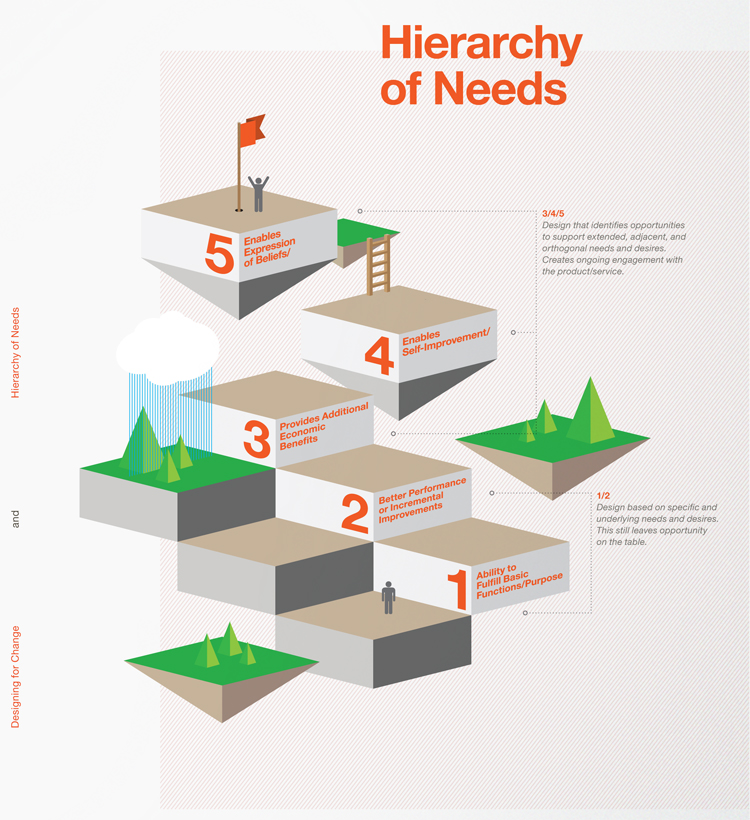
                                (image: http://images.fastcompany.com/upload/5_10x10_Infographic_750px.jpg)


Following up with Maslow’s Theorem for the Great Society. I think it’s important to go over some basic economics, in reference to social services. Poverty in the United States represents a larger portion of the society. The following represents discussion board answers I provided for a social welfare course at ASU Fall 2011. These questions and answer, provide a vivid expose of what poverty is in the United States, and how Maslow's Theory of hierarchy of needs can flourish a Great Society in the USA. Within this society self-sufficiency can be obtained, while business/economical growth procure.  The author of the text was Jacqueline Brux (Economic Issues and Policy (5th edition) and the instructor Mrs. Niles. 

Paul D. Goree
SWU 194 (ASU Fall 2011)
 DB# 6 Poverty

1.      Describe key micro economic forces that serve to support the continued existence of poverty in the United States?

The primary key micro economic  forces, that support the continued existence of poverty in the United States are, definition of poverty, feminization of poverty, lower wage service sector jobs, budget cuts and program time lines. I think it’s important that an accurate definition of poverty be understood. In chapter 6 of Jacqueline M. Brux’s text, Economic Issues and Policy, Brux’s  states that, “There are two ways to look at poverty. One is considering relative poverty-a situation in which people are poor in comparison to other people. The other is b y considering absolute poverty- a situation in which people experience actual hardship according to some objective criterion.”(Brux, 2008, pg. 132)

Between the two phrases, either one could be manipulated to include a portion of the society which is not actually in poverty, but because of the measure used to define, they are placed into poverty.  For example, if one was to use absolute poverty, and made the criterion be, ownership of a home. This would exclude all those who do make more than the poverty line, but due to their non-ownership of housing, they are now automatically considered in poverty. I think this manipulation of definition is used often by the media and political personalities in an attempt to push their agendas.

 Another aspect to consider is the feminization of poverty. In chapter 1 of Karen Seccombe’s text, So You Think I Drive A Cadillac, Seccombe states that, “…women’s economic status is often more tentative than is the case for men. This is particularly true if a woman is not employed and is deriving her economic status through her partner…even when they are employed, women face unique challenges in the general workplace. Lower wages for work of comparable worth, occupational segregation, and unequal returns on education …” (Seccombe, 1999, pg.8)  Seeming that women represent the majority of AFDC/TANF cases loads, there is an entire realm of stigma, associating poverty with social welfare, and women. Obviously these associations are false, yet still contribute to support poverty in the United States. This is more apparent in Brux’s text, when it is suggested, “women bear the greatest burden of poverty…Historical reasons include growth in the number of female headed households, teen pregnancies, discrimination in the labor market and domestic violence towards women.”(Brux, pg.139)

Seeming discrimination in the labor market is a reality, then it should come to no surprise how the lower wage service sector supports poverty and assist in keeping women economic status low.


2.      Describe key macro economic forces that serve to support the continued existence of poverty in the United States?

The prevailing macro economic forces that serves to support poverty in  the United States is income distribution.  In chapter 6, Brux’s defines income distribution as follows, “The income distribution refers to the division of total income in the economy among different income groups…income distribution is based on…money income: that is, all household income received from working, interest, rent, dividends, or any other source before payment of taxes. Included…is any government income transfer…not counted…are in-kind transfers.” ( pg. 132) I find several problems with this method of income distribution. First it excludes in kind transfers (food stamps, section 8,  public health, TANF cash aid), thus these recipients do not have any money income, when being categorized. However the person working and receiving money income, use that income for food, housing and health care purposes. In addition these  persons with money income have the advantage of accumulating a savings. 

Brux’s states that, “Most people, economists included, argue that some degree of income inequality is essential to preserve incentives.”(pg.133) Although I agree with this, when considering “support of continued existence of poverty in the United States”, I tend to find incentives a cruel deceptive word. This is because when a person has no money income (and is classified as such by income distribution), the ladder to some upper ward economical security is diminished. I think it becomes non-realistic to vision prosperity, when you are homeless and in poverty. The ideal of incentives, seems to lapse these two segments of the society. Brux’s points out, “Poverty also results in poor health and nutrition, which may sap energy and harm labor productivity.” (pg.133) As long as poor health and nutrition exist in the United States, industry markets can be created to attend to the need. Thus the continued existence of poverty under the term of income distribution is beneficial to the creators of these attentive industry markets. 

Another aspect I like to consider is unemployment. In chapter 14 of Brux’s text, to understand unemployment, Brux’s suggest one must understand the labor force. “The labor force refers to all people age 16 and older who are working for pay plus all people in this age range who are actively seeking employment.” (pg. 324)  When these two forces decrease, the number of people entering poverty will increase. This can be beneficial to some employers, because it give justification to the Tertiary Job Sector.  In chapter 8 of Seccombe’s text, Seccombe defines the tertiary sector as, “The tertiary sector, or service sector, is the fastest growing sector of our economy and focuses on providing a wide variety of services.” (pg.198) It is suggested that these tertiary jobs contribute to poverty, because they pay less, offer few benefits, are primarily part time employment and are without union protections. All of these factors lead to an increase in poverty, using the absolute poverty model.


3.      Discuss poverty as an issue related to social justice?

When I think of social justice and poverty, I think of government and non-governmental organizations that assist to decrease the burden many face in their day to day functioning. Social Justice implies, that all citizens are entitled to a respectable level of existence. In chapter 6 of Brux’s text,  Brux provides an excellent explanation regarding social justice and poverty. “Because discrimination plays a role in poverty, it is important that our nation strives to provide equal opportunities to all people in the area of education, housing and employment…Several government programs are designed to help the poor.” (pg. 144-145) A few of these programs include, Section 8 for affordable housing, Medicaid for healthcare, SSI for income after retirement, WIC for supplemental nutrition for children and women, Food Stamps for nutritional needs, TANF Cash for emergency cash assistants.

In chapter 7 of Seccombe’s text, testimonials are provided, detailing the social justice of poverty from the recipient perspective. Seccombe states, “Few women had quick or enthusiastic answers to my query about the positive aspects of welfare…Three themes emerged in our discussion. First, a number of women commented that welfare provides an important floor for poor families, albeit a marginal one. Without welfare, several women told me that they would have no recourse other than to be living out on the streets, in a homeless shelter, or remain married to a physically or emotionally abusive spouse…Second, several specific programs were mentioned repeatedly as being particularly helpful. Medicaid was mentioned most often…The third strength noted was the welfare system is the favorable review given to several reform efforts. In particular, voluntary programs designed to assist women’s transition off welfare…The most comprehensive of these programs, the Family Transition Program (FTP), was a two year “human-capital-investment” program that included numerous features designed to assist participants towards self-sufficiency…” (pg.162-163)

            Although economic conservatives will endlessly debate these programs are spillover  cost             passed on to tax payers, without these valuable programs, much worst events would unfold                 within this nation.

  4.) Discuss poverty as an issue related to economic justice or  injustice?
         
When I think of economic justice/injustice and poverty, I immediately look towards our elected officials to remedy any faults. To me, economic injustice is preventing opportunity to segments of the population. For example, I cannot find justification for the use of regressive taxes in the United States. Why would the society want to tax the greater amount from the lowest income, than from the higher income.  It seems completely backwards, and place duress and burdens upon the lowest income workers. In chapter 16 of Brux’s text, she seems to agree, when she states, “A regressive tax is one that takes a larger percent of income from low-income households than from high-income ones. Most of the taxes in our country are regressive. Does this surprise you? Our regressive taxes include sales taxes, most excise taxes, property taxes and the Social Security tax. Because some of these taxes are not levied directly on incomes, seeing why they are regressive is sometimes difficult.” (pg. 385)

Brux is correct, regressive taxation should not surprise anyone, which is why our nation is experiencing its 11th week of Occupy America. The goal is to make Americans aware of their true economical status in this nation, which is 99%. And why is it that 99% of the population is expected to carry 100% of the national debit, when such essentials: as employment is a huge barrier. It’s time for the 1% to redistribute their wealth in order for there to be economical justices.

5)  Discuss poverty as a life course risk?  

I feel the best way I can answer this question, is from the testimonials provided by Karen Seccombe in her text, “So You Think I Drive A Cadillac?” These testimonials provide some real life poverty and the course risk involved.  At the beginning of each testimonial I will provided the course risk involved with each testimonial.

Nutrition:
In chapter 5, Seccombe details factors of living and surviving on food stamps. One of the respondents, Stephanie, a nursing student, stated the following. “No! I eat out very rarely, so I find that food stamps rarely last the month for me. I eat very little meat. But I try to eat a lot of fresh fruits and vegetables. I try to be very healthful in my diet. I eat a low fat diet. And unfortunately, those foods are expensive. When it comes to the end of the month, I sometimes have to pay $20 or $30 (cash) until the next time I can get food stamps. Some months are four weeks, and some are five. Like, right now, it’s tight. I only have one gallon of milk in the fridge, a half a loaf of bread, and some orange juice. I have to be real creative about what I make to eat. There haven’t been any fruits or veggies this past week. (pg. 112)

Un-Planned Adult Pregnancies:
In chapter 1, Seccombe details factors of un-planned adult pregnancy.  The respondent is Patrice. Seccombe asked “Do you think this happens to a lot of women?” Patrice states, “I really do. Well, it’s like this. Being a young lady, I think a lot of women date a guy for years. And then you get pregnant. You expect him not really to marry you, but to be there for you and the child, but they hump up and leave. I believe women get depressed because of the fact that you got to just totally give up your life. Like me, I was in nursing school, and I was doing great. I came pregnant, so I got depressed because the guy left after all those years. I had to resign in my eight month of pregnancy. But I was working then too, because I was trying to maintain my rent and my car, you know. I think a lot of women become discouraged and depressed because what you are expecting in life-all your dreams and fantasies become nightmares. The guy leaves you, and then you know you got to turn to welfare, which everybody thinks is bad because, you know its taxpayer money. People be criticizing you. Then you have to stand in these long lines to get stamps. Then you have to be criticized on a daily basis. And it’s just discouraging Then you have to go for your appointments, sometimes there for two or three hours before your worker calls you. They just blobber your business out loud in the lobby [laughter]. You got to be embarrassed. You look around, you know? Then you have to go into the health department and everybody looks pitiful…You be depressed. Then you be vulnerable to the situation. The first guy-well maybe not the first-but a guy promises you the world and you are weak to the situation. You don’t think your own situation is going to ever get any better, and then you end up in the same situation all over again if you don’t be smart. But after two mistakes-I won’t say mistakes because I love my children-but after two down falls, you know, with men, I’ve learned [laughter]. (pg. 4-5)

Lower Tier Employment: Consequences and Barriers:
In chapter 8, Seccombe details getting off of welfare, is it possible to become self sufficient? The is Eliza, a mother of 4. “That’s something I need is a job. I’ve been looking. I just can’t find the right one. I used to work at [fast food industry], but I wasn’t making much money. By the time I caught the city bus, went out there, by the time I got to my kids, I spent all the money that they gave me. I liked the job, but it was just that I had to pay .75 cent to get to work, and paid .75 cent to get back. If I missed the bus, I had to give somebody $3 or $4 to take me. And they wouldn't give me enough hours. I told them when they gave me this jobs that I needed at least 30-40 hours a week. I just can’t afford to work less. But I was wasting my time going out there. I had to be at work by 11 o’clock, but they would send me home by 2 o’clock. I didn’t even get 20 hours a week. You hear what I’m saying? Ten or 12, maybe. I think what they was doing was hiring you for the busy hour, and once the busy hour passed, you was sent out of there. I had to quit because it was costing me too much to go way over there.
            

Monday, November 10, 2014

Maslow Theorem: The Great Society America 21st Century


Maslow Theorem: The Great Society America 21st Century (work in progress-by Paul D. Goree)

Now that President Obama has cemented another critical piece to the resolvement of the Great Society. We now can look towards the final piece.  Abraham Maslow, cites several lower hierarchy social requirements, needed for upward mobility. These needs represent the physiological and sociological requirements of an individual to survive within a societal setting.These needs include water, food, safety, security, and shelter. If these lower hierarchy needs are not consistent/stable, then social upward mobility is not possible. For example, as soon as an individual has food/water, they are in need of shelter/housing. Once shelter/housing is required, they may lose their job, and then shelter/housing becomes an issue again. Thus this becomes a continuous circle,resulting in discouragement; in the Land of Liberty.

The Great Society (L.B. Johnson), suggests that all of the lower level survival needs be state provided (social welfare). With universal health care resolves safety and security, as AFDC/TANF resolves water and food. Now American can look to resolving housing needs. We can look towards HUD for some of these answers. Yet it still seems that states, may be able to resolve housing much better than the centralized bureaucracy that HUD is.

In Rubinger’s article: Why U.S. Desperately needs affordable homes, he states:
“America faces many more unresolved affordable housing challenges. A $26 billion capital-needs backlog that's associated with our publicly financed affordable housing stock looms.
Traditional federal subsidies that enable affordability -- such as Section 8, which authorizes rental housing payment assistance to private landlords on behalf of more than 3 million low-income households -- are being cut back. Federal housing subsidy programs such as HOME were slashed this year. These vital programs need to be preserved and expanded.

Other important tools are at the ready, but sadly, they are inactive or underutilized.
Back in 2008, President George W. Bush signed into law the National Housing Trust Fund, requiring at least 90% of its funds be used to build, preserve or rehabilitate rental housing for low-income households. But this program and others like it have yet to receive the funding that was envisioned by the law.

Another valuable initiative is the Rental Assistance Demonstration Program, which enables private developers to work with public housing authorities to preserve affordable housing. But it has only been funded for up to 60,000 housing units…”

According to the Annual Homeless Assessment Report (2013) the following data reflects the homeless population as of January 2013:

January 2013
•           610,042 people were homeless in the United States.
•           Nearly two-thirds of people experiencing homelessness (65 percent or 394,698) were living in emergency shelters or transitional housing programs.
•           More than one-third of all homeless people(35 percent or 215,344) were living in un-sheltered locations such as under bridges, in cars, or in abandoned buildings. Age of Homeless Population in 2013. In 2013, HUD required communities to provide estimates of homelessness in three age ranges— under age 18, 18 to 24 years old, and 25 years old and older.
•           More than two-thirds of all homeless people (67 percent or 410,352 people) were 25 years or older.
•           10 percent of homeless people were 18 to 24 years old (or 61,541). This percentage remains the same regardless of sheltered status.
•           Nearly one-quarter of all homeless people (23 percent or 138,149) were homeless children under the age of 18, and 30 percent of sheltered homeless people were children.
•           80 percent of unsheltered homeless people were over the age of 25. Less than 10 percent of the unsheltered population was under 18.

REFERNCES:
US Department of Housing and Urban Development. (2013). Annual Homeless Assessment Report to Congress (AHAR). Retrieved from  https://www.hudexchange.info/resources/documents/ahar-2013-part1.pdf

Rubinger, Micheal. (2014). Why U.S. Desperately needs affordable homes. CNN Opinion. Retrieved from http://www.cnn.com/2014/04/28/opinion/rubinger-affordable-housing/