Tuesday, November 18, 2014

Life 2020

Sometimes visuals are more effect than worded expressions. Taking a good ideal, from Pinterest creator Ben Silbermann, vision boards take on a new directions and worth (sub-consciously-social network value of future thoughts).


Here is my pinterest 2020-Life (2020 meaning clarity and focus within the environment of life!)


http://www.pinterest.com/paulgoreegoree/life-2020-career-future-careers/

Thursday, November 13, 2014

JOURNEY TO MARS (Torpor Stasis-Therapeutic Hypothermia Coma)


JOURNEY TO MARS (Torpor Stasis-Therapeutic Hypothermia Coma) By: Paul D.Goree 2014

Sci-fi becomes reality, as NASA along with Atlanta based, Space Works develop advanced prototypes for space travel. John Bradford CEO of Space Works provided NASA with the preliminary method of space travel. Long-term space travel has been a mission of many, yet has remained remote.  The hazardous space environment, could create several threats to astronauts/consumers, health and psychological wellbeing. NASA has found that besides the psychological stress of isolation, astronauts would have to overcome, zero gravity for extended periods. Consequences of zero gravity is muscle wastage and bone decalcification. Also of concern is radiation from the Sun over long periods of exposure, can result in cancer.

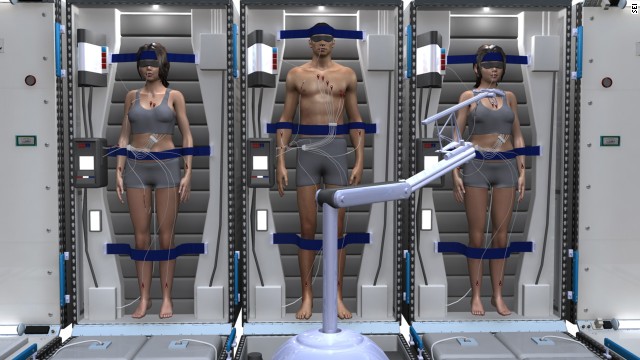
Until recently, these obstacles prevented strategic development of long term human space missions. With medical technical advancements, Bradford’s team has created a sleeper spaceship. The sleeper spaceship carries 6 passengers and utilities artificially induced hibernation. NASA space studies now can be a reality, as astronauts travel unconsciously while their metabolism is altered into slow motion. Space travel to Mars is a 180 days, with this new technology, 160 of those days could be spent in a state of torpor stasis.


The torpor periods would be supervised by rotating flight members. Each member would be scheduled to awake for a brief period, to check in on the other members. This would include checking their intravenous feeding tubes, urine removal systems, Earth communication, and temperature modulators.  The members are awakened when the hibernation module hooks up a medical system. The medical system inserts body cooling tubes through the nostrils. Heating pads regulate temperature, to make sure the body doesn’t cool too rapidly.


The body temperature must drop only about five degrees Fahrenheit—98.6 to about 93 degrees. Sedatives in the feeding lines would suppress the members shiver flexes.  The space sleeper unit, rotates creating a centrifugal force simulating gravity. This would prevent the consequences of zero gravity. The hibernation of astronauts makes the possibility of long term space missions more of a reality. These missions would be easier and more affordable with minimal health risk.


Torpor Stasis is based on current medical procedures, used to suspend a patient during cardiac arrest incidences, attenuating injuries, brain injuries, and improving neurologic outcomes.  In 2005 American Heart Association provided guidelines for therapeutic hypothermia, a resuscitation science dating back to Hippocrates. The procedure includes returning an unconscious adult patient to spontaneous circulation after hospital cardiac arrest at 32-34 Celsius for 12-24 hours. The cooling method used to induce hypothermia coma includes ice packs, cooling blankets with heat exchange devices, cooling helmet for the brain, cooling methods for catheter-based technologies, cooling methods for infusion of cold fluids.

 Achieving cooling target temperature (torpor stasis) can be reached within 3-4 hours. The rewarming begins 24 hours after the operation. Mean arterial pressure (MAP) is used to control hypertension.  While hemodynamic instability is monitored in case of dysrhythmia (bleeding) develops.  ECG Osbourne monitor heart rate and the skin is checked every 2-6 hours for thermal injuries caused by the cold blankets.

The use of therapeutic hypothermia in space travel is, "Ultimately, what we'll have to do…It may take some time to get it to the state of effectiveness we want it to go to," Bradford stated. The project is less than 20 years (estimated 2030). NASA’s recent SLS (Space Launch System) with the new Orion spacecraft expected to launch December 04, 2014: NASA is preparing for the first human test mission to Mars, in 2030. Bradford believes that if all goes well with NASA’s intended future launches, the sleep spacecraft could be a great vehicle for colonization of the moon or mars.


REFERENCES :
Adler, Jonathan (MD).(2014). Therapeutic Hypothermia. Medscap. http://emedicine.medscape.com/article/812407-overview

Brumfield, Ben. (2014). Sleeper spaceship could carry first humans to Mars in hibernation state. CNN. Retrieved from:  http://us.cnn.com/2014/10/07/tech/innovation/mars-hibernation-flight/index.html?iid=article_sidebar

N.A.S.A, (2014). Human Exploration: Goal 4: Prepare for the Human Exploration of Mars. N.A.S.A. Programs and Missions. Retrieved: from http://mars.nasa.gov/programmissions/science/goal4/


McKinnon, Mika. (2014). The Orion Spacecraft is at the Launch Pad and Strapped to its rocket. Space-Kinja. Retrieved from: http://space.io9.com/the-orion-spacecraft-is-at-the-launch-pad-and-strapped-1658202641


Wednesday, November 12, 2014

Part Two: Maslow's Theorem-The Great Society (Poverty in the USA)


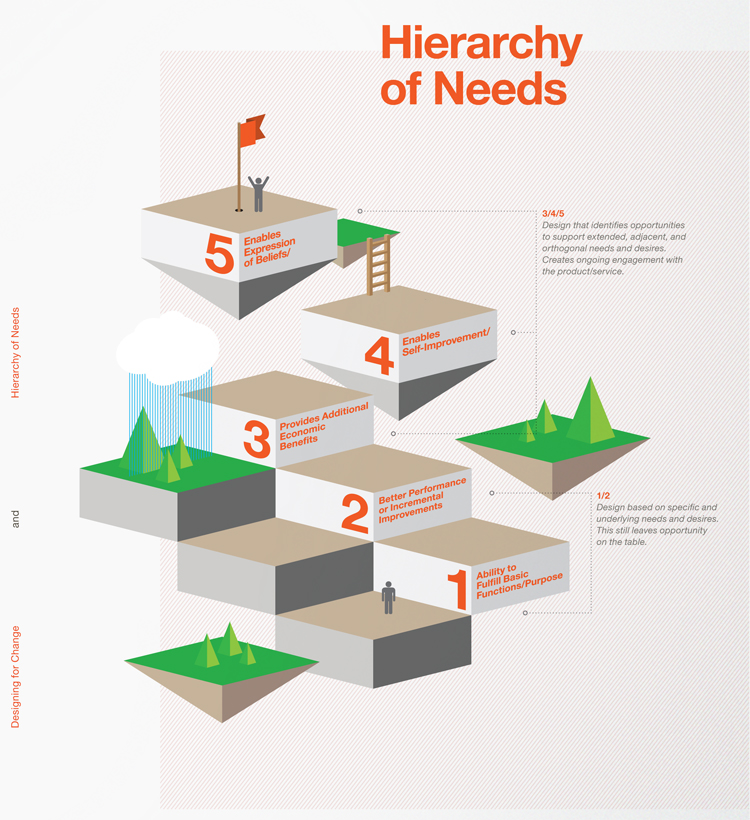
                                (image: http://images.fastcompany.com/upload/5_10x10_Infographic_750px.jpg)


Following up with Maslow’s Theorem for the Great Society. I think it’s important to go over some basic economics, in reference to social services. Poverty in the United States represents a larger portion of the society. The following represents discussion board answers I provided for a social welfare course at ASU Fall 2011. These questions and answer, provide a vivid expose of what poverty is in the United States, and how Maslow's Theory of hierarchy of needs can flourish a Great Society in the USA. Within this society self-sufficiency can be obtained, while business/economical growth procure.  The author of the text was Jacqueline Brux (Economic Issues and Policy (5th edition) and the instructor Mrs. Niles. 

Paul D. Goree
SWU 194 (ASU Fall 2011)
 DB# 6 Poverty

1.      Describe key micro economic forces that serve to support the continued existence of poverty in the United States?

The primary key micro economic  forces, that support the continued existence of poverty in the United States are, definition of poverty, feminization of poverty, lower wage service sector jobs, budget cuts and program time lines. I think it’s important that an accurate definition of poverty be understood. In chapter 6 of Jacqueline M. Brux’s text, Economic Issues and Policy, Brux’s  states that, “There are two ways to look at poverty. One is considering relative poverty-a situation in which people are poor in comparison to other people. The other is b y considering absolute poverty- a situation in which people experience actual hardship according to some objective criterion.”(Brux, 2008, pg. 132)

Between the two phrases, either one could be manipulated to include a portion of the society which is not actually in poverty, but because of the measure used to define, they are placed into poverty.  For example, if one was to use absolute poverty, and made the criterion be, ownership of a home. This would exclude all those who do make more than the poverty line, but due to their non-ownership of housing, they are now automatically considered in poverty. I think this manipulation of definition is used often by the media and political personalities in an attempt to push their agendas.

 Another aspect to consider is the feminization of poverty. In chapter 1 of Karen Seccombe’s text, So You Think I Drive A Cadillac, Seccombe states that, “…women’s economic status is often more tentative than is the case for men. This is particularly true if a woman is not employed and is deriving her economic status through her partner…even when they are employed, women face unique challenges in the general workplace. Lower wages for work of comparable worth, occupational segregation, and unequal returns on education …” (Seccombe, 1999, pg.8)  Seeming that women represent the majority of AFDC/TANF cases loads, there is an entire realm of stigma, associating poverty with social welfare, and women. Obviously these associations are false, yet still contribute to support poverty in the United States. This is more apparent in Brux’s text, when it is suggested, “women bear the greatest burden of poverty…Historical reasons include growth in the number of female headed households, teen pregnancies, discrimination in the labor market and domestic violence towards women.”(Brux, pg.139)

Seeming discrimination in the labor market is a reality, then it should come to no surprise how the lower wage service sector supports poverty and assist in keeping women economic status low.


2.      Describe key macro economic forces that serve to support the continued existence of poverty in the United States?

The prevailing macro economic forces that serves to support poverty in  the United States is income distribution.  In chapter 6, Brux’s defines income distribution as follows, “The income distribution refers to the division of total income in the economy among different income groups…income distribution is based on…money income: that is, all household income received from working, interest, rent, dividends, or any other source before payment of taxes. Included…is any government income transfer…not counted…are in-kind transfers.” ( pg. 132) I find several problems with this method of income distribution. First it excludes in kind transfers (food stamps, section 8,  public health, TANF cash aid), thus these recipients do not have any money income, when being categorized. However the person working and receiving money income, use that income for food, housing and health care purposes. In addition these  persons with money income have the advantage of accumulating a savings. 

Brux’s states that, “Most people, economists included, argue that some degree of income inequality is essential to preserve incentives.”(pg.133) Although I agree with this, when considering “support of continued existence of poverty in the United States”, I tend to find incentives a cruel deceptive word. This is because when a person has no money income (and is classified as such by income distribution), the ladder to some upper ward economical security is diminished. I think it becomes non-realistic to vision prosperity, when you are homeless and in poverty. The ideal of incentives, seems to lapse these two segments of the society. Brux’s points out, “Poverty also results in poor health and nutrition, which may sap energy and harm labor productivity.” (pg.133) As long as poor health and nutrition exist in the United States, industry markets can be created to attend to the need. Thus the continued existence of poverty under the term of income distribution is beneficial to the creators of these attentive industry markets. 

Another aspect I like to consider is unemployment. In chapter 14 of Brux’s text, to understand unemployment, Brux’s suggest one must understand the labor force. “The labor force refers to all people age 16 and older who are working for pay plus all people in this age range who are actively seeking employment.” (pg. 324)  When these two forces decrease, the number of people entering poverty will increase. This can be beneficial to some employers, because it give justification to the Tertiary Job Sector.  In chapter 8 of Seccombe’s text, Seccombe defines the tertiary sector as, “The tertiary sector, or service sector, is the fastest growing sector of our economy and focuses on providing a wide variety of services.” (pg.198) It is suggested that these tertiary jobs contribute to poverty, because they pay less, offer few benefits, are primarily part time employment and are without union protections. All of these factors lead to an increase in poverty, using the absolute poverty model.


3.      Discuss poverty as an issue related to social justice?

When I think of social justice and poverty, I think of government and non-governmental organizations that assist to decrease the burden many face in their day to day functioning. Social Justice implies, that all citizens are entitled to a respectable level of existence. In chapter 6 of Brux’s text,  Brux provides an excellent explanation regarding social justice and poverty. “Because discrimination plays a role in poverty, it is important that our nation strives to provide equal opportunities to all people in the area of education, housing and employment…Several government programs are designed to help the poor.” (pg. 144-145) A few of these programs include, Section 8 for affordable housing, Medicaid for healthcare, SSI for income after retirement, WIC for supplemental nutrition for children and women, Food Stamps for nutritional needs, TANF Cash for emergency cash assistants.

In chapter 7 of Seccombe’s text, testimonials are provided, detailing the social justice of poverty from the recipient perspective. Seccombe states, “Few women had quick or enthusiastic answers to my query about the positive aspects of welfare…Three themes emerged in our discussion. First, a number of women commented that welfare provides an important floor for poor families, albeit a marginal one. Without welfare, several women told me that they would have no recourse other than to be living out on the streets, in a homeless shelter, or remain married to a physically or emotionally abusive spouse…Second, several specific programs were mentioned repeatedly as being particularly helpful. Medicaid was mentioned most often…The third strength noted was the welfare system is the favorable review given to several reform efforts. In particular, voluntary programs designed to assist women’s transition off welfare…The most comprehensive of these programs, the Family Transition Program (FTP), was a two year “human-capital-investment” program that included numerous features designed to assist participants towards self-sufficiency…” (pg.162-163)

            Although economic conservatives will endlessly debate these programs are spillover  cost             passed on to tax payers, without these valuable programs, much worst events would unfold                 within this nation.

  4.) Discuss poverty as an issue related to economic justice or  injustice?
         
When I think of economic justice/injustice and poverty, I immediately look towards our elected officials to remedy any faults. To me, economic injustice is preventing opportunity to segments of the population. For example, I cannot find justification for the use of regressive taxes in the United States. Why would the society want to tax the greater amount from the lowest income, than from the higher income.  It seems completely backwards, and place duress and burdens upon the lowest income workers. In chapter 16 of Brux’s text, she seems to agree, when she states, “A regressive tax is one that takes a larger percent of income from low-income households than from high-income ones. Most of the taxes in our country are regressive. Does this surprise you? Our regressive taxes include sales taxes, most excise taxes, property taxes and the Social Security tax. Because some of these taxes are not levied directly on incomes, seeing why they are regressive is sometimes difficult.” (pg. 385)

Brux is correct, regressive taxation should not surprise anyone, which is why our nation is experiencing its 11th week of Occupy America. The goal is to make Americans aware of their true economical status in this nation, which is 99%. And why is it that 99% of the population is expected to carry 100% of the national debit, when such essentials: as employment is a huge barrier. It’s time for the 1% to redistribute their wealth in order for there to be economical justices.

5)  Discuss poverty as a life course risk?  

I feel the best way I can answer this question, is from the testimonials provided by Karen Seccombe in her text, “So You Think I Drive A Cadillac?” These testimonials provide some real life poverty and the course risk involved.  At the beginning of each testimonial I will provided the course risk involved with each testimonial.

Nutrition:
In chapter 5, Seccombe details factors of living and surviving on food stamps. One of the respondents, Stephanie, a nursing student, stated the following. “No! I eat out very rarely, so I find that food stamps rarely last the month for me. I eat very little meat. But I try to eat a lot of fresh fruits and vegetables. I try to be very healthful in my diet. I eat a low fat diet. And unfortunately, those foods are expensive. When it comes to the end of the month, I sometimes have to pay $20 or $30 (cash) until the next time I can get food stamps. Some months are four weeks, and some are five. Like, right now, it’s tight. I only have one gallon of milk in the fridge, a half a loaf of bread, and some orange juice. I have to be real creative about what I make to eat. There haven’t been any fruits or veggies this past week. (pg. 112)

Un-Planned Adult Pregnancies:
In chapter 1, Seccombe details factors of un-planned adult pregnancy.  The respondent is Patrice. Seccombe asked “Do you think this happens to a lot of women?” Patrice states, “I really do. Well, it’s like this. Being a young lady, I think a lot of women date a guy for years. And then you get pregnant. You expect him not really to marry you, but to be there for you and the child, but they hump up and leave. I believe women get depressed because of the fact that you got to just totally give up your life. Like me, I was in nursing school, and I was doing great. I came pregnant, so I got depressed because the guy left after all those years. I had to resign in my eight month of pregnancy. But I was working then too, because I was trying to maintain my rent and my car, you know. I think a lot of women become discouraged and depressed because what you are expecting in life-all your dreams and fantasies become nightmares. The guy leaves you, and then you know you got to turn to welfare, which everybody thinks is bad because, you know its taxpayer money. People be criticizing you. Then you have to stand in these long lines to get stamps. Then you have to be criticized on a daily basis. And it’s just discouraging Then you have to go for your appointments, sometimes there for two or three hours before your worker calls you. They just blobber your business out loud in the lobby [laughter]. You got to be embarrassed. You look around, you know? Then you have to go into the health department and everybody looks pitiful…You be depressed. Then you be vulnerable to the situation. The first guy-well maybe not the first-but a guy promises you the world and you are weak to the situation. You don’t think your own situation is going to ever get any better, and then you end up in the same situation all over again if you don’t be smart. But after two mistakes-I won’t say mistakes because I love my children-but after two down falls, you know, with men, I’ve learned [laughter]. (pg. 4-5)

Lower Tier Employment: Consequences and Barriers:
In chapter 8, Seccombe details getting off of welfare, is it possible to become self sufficient? The is Eliza, a mother of 4. “That’s something I need is a job. I’ve been looking. I just can’t find the right one. I used to work at [fast food industry], but I wasn’t making much money. By the time I caught the city bus, went out there, by the time I got to my kids, I spent all the money that they gave me. I liked the job, but it was just that I had to pay .75 cent to get to work, and paid .75 cent to get back. If I missed the bus, I had to give somebody $3 or $4 to take me. And they wouldn't give me enough hours. I told them when they gave me this jobs that I needed at least 30-40 hours a week. I just can’t afford to work less. But I was wasting my time going out there. I had to be at work by 11 o’clock, but they would send me home by 2 o’clock. I didn’t even get 20 hours a week. You hear what I’m saying? Ten or 12, maybe. I think what they was doing was hiring you for the busy hour, and once the busy hour passed, you was sent out of there. I had to quit because it was costing me too much to go way over there.
            

Monday, November 10, 2014

Maslow Theorem: The Great Society America 21st Century


Maslow Theorem: The Great Society America 21st Century (work in progress-by Paul D. Goree)

Now that President Obama has cemented another critical piece to the resolvement of the Great Society. We now can look towards the final piece.  Abraham Maslow, cites several lower hierarchy social requirements, needed for upward mobility. These needs represent the physiological and sociological requirements of an individual to survive within a societal setting.These needs include water, food, safety, security, and shelter. If these lower hierarchy needs are not consistent/stable, then social upward mobility is not possible. For example, as soon as an individual has food/water, they are in need of shelter/housing. Once shelter/housing is required, they may lose their job, and then shelter/housing becomes an issue again. Thus this becomes a continuous circle,resulting in discouragement; in the Land of Liberty.

The Great Society (L.B. Johnson), suggests that all of the lower level survival needs be state provided (social welfare). With universal health care resolves safety and security, as AFDC/TANF resolves water and food. Now American can look to resolving housing needs. We can look towards HUD for some of these answers. Yet it still seems that states, may be able to resolve housing much better than the centralized bureaucracy that HUD is.

In Rubinger’s article: Why U.S. Desperately needs affordable homes, he states:
“America faces many more unresolved affordable housing challenges. A $26 billion capital-needs backlog that's associated with our publicly financed affordable housing stock looms.
Traditional federal subsidies that enable affordability -- such as Section 8, which authorizes rental housing payment assistance to private landlords on behalf of more than 3 million low-income households -- are being cut back. Federal housing subsidy programs such as HOME were slashed this year. These vital programs need to be preserved and expanded.

Other important tools are at the ready, but sadly, they are inactive or underutilized.
Back in 2008, President George W. Bush signed into law the National Housing Trust Fund, requiring at least 90% of its funds be used to build, preserve or rehabilitate rental housing for low-income households. But this program and others like it have yet to receive the funding that was envisioned by the law.

Another valuable initiative is the Rental Assistance Demonstration Program, which enables private developers to work with public housing authorities to preserve affordable housing. But it has only been funded for up to 60,000 housing units…”

According to the Annual Homeless Assessment Report (2013) the following data reflects the homeless population as of January 2013:

January 2013
•           610,042 people were homeless in the United States.
•           Nearly two-thirds of people experiencing homelessness (65 percent or 394,698) were living in emergency shelters or transitional housing programs.
•           More than one-third of all homeless people(35 percent or 215,344) were living in un-sheltered locations such as under bridges, in cars, or in abandoned buildings. Age of Homeless Population in 2013. In 2013, HUD required communities to provide estimates of homelessness in three age ranges— under age 18, 18 to 24 years old, and 25 years old and older.
•           More than two-thirds of all homeless people (67 percent or 410,352 people) were 25 years or older.
•           10 percent of homeless people were 18 to 24 years old (or 61,541). This percentage remains the same regardless of sheltered status.
•           Nearly one-quarter of all homeless people (23 percent or 138,149) were homeless children under the age of 18, and 30 percent of sheltered homeless people were children.
•           80 percent of unsheltered homeless people were over the age of 25. Less than 10 percent of the unsheltered population was under 18.

REFERNCES:
US Department of Housing and Urban Development. (2013). Annual Homeless Assessment Report to Congress (AHAR). Retrieved from  https://www.hudexchange.info/resources/documents/ahar-2013-part1.pdf

Rubinger, Micheal. (2014). Why U.S. Desperately needs affordable homes. CNN Opinion. Retrieved from http://www.cnn.com/2014/04/28/opinion/rubinger-affordable-housing/


Thursday, October 30, 2014

Tact, Mr.Lincoln-Simple Lincoln


TACT, MR.LINCOLN-SIMPLE LINCOLN. (by: Paul Dewitt Goree 2014/10 phxaz)

TACT, Mr. Lincoln (“Simple Lincoln”)
I have been posting several post (various social networks) that are beneficial to me as I go through what I am perceiving as it is happening to me. Thus since 2013 I’ve been posting about a Default (last/formal declaration or accordance) resulting in a Revolt. And until the revolt has closure, all that was constructed cannot simply be abolished. For several reasons, first we (I) am an American, and with that title comes the rights of expression. I cannot nor will wavier my freedom to express, that which I believe is correct. Likewise I encourage all to utilize to the most, their liberties, advocate our liberties and allow all to do the same. The events of my revolt, are due to the negligent actions of 2 case managers (Juan (Johnny) Garcia and Margret Finn) at SouthWest Behavioral Services. I can’t believe that the state of Arizona has licensed 2 case managers, providing them the right to do as they please. The disruption of another persons life could have been prevented by them. The additional comments and suggestion from other professionals, (like the Phoenix Police Department) went unattended to, as I let my life plunged downward, shock that these events are going unattended. As of 10/30/2014 legal action seems to be either too expensive or difficult. Thus I am left to continue writing and posting that maybe LIBERTY in the United States is bias. And that characters, such as Finn and Garcia can actually get away with murder. How many other clients have they done wrong. I’ve met 5 other. So Arizona is in the end responsible for licensing unethical case managers!
READ MORE AT: http://paulgoree.blogspot.com/2014/09/client-profile-debate-unethical-actions.html
With that in mind, this week (Monday 20, 2014) I came across an uplifting article in the Smithsonian. The article was uplifting because it made me realize that my actions as they may be perceive by others, at some point are not well with me either. For example this article is definite proof to me, that my effort has interfered with my prior developed intent. The article was published February 2014 and I am just now reading it October 2014. Shame on me!!! But then it’s best to receive information when it is timely. Timely for me, is this week.The article Lincoln’s Boys is by Joshua Zeltz. As I read this article, I was amazed, up to page 77. Upon which the amazement became an internalization (providing for me validation or my purpose). What was written is as follows…
“(Lincoln) Populated his cabinet with former opponents for the Republican presidents discernment and magnanimity in choosing men who he “did not know”…He recognized them as governors, senators, and statesmen, while they yet looked upon him as a simple frontier lawyer at most, and a rival to who chance had transferred the honor they felt to be due to themselves.” Presaging the popular argument that Lincoln forged a “team of rivals”…the strong personalities and talents who constituted his inner circle did not always appreciate, “the stronger will and …more delicate tact [that] inspired and guided them all.” (Smithsonian, pg.77)
Upon reading this section, I paused and quickly reflect upon my own life (my entire life). What first comes to thought is the book, The Elephant in The Room by Eviatar Zerubavel. Lincoln’s elephant was his life developed tact (which I term his Americanism), and how that lived tact flourished to it’s fullest purposes (regardless of all else, it seems at times). The fact that others ignore or are in denial of the elephant, doesn’t diminish from their effort, as far as Lincoln is concerned. Seeming through his actions alone, accepting them as the persons that they are, as they introduce themselves, as they follow through with their corresponding actions. Still isn’t reason for him to alter any aspect of his life, as lived. Their appreciation of his life development, criticized by them with expression of his leadership abilities, his simple minded ways and thoughts, his inability to choose worthy persons (from his wife to generals), his gullible nature, awkward stance, and peculiar essences. With all of their comments/thoughts/critics, he did by action alone, let them and their expression be, as they should be: VALID. Seeming this is the United States of America, and their opinions are guaranteed through the INDIVIDUALISM of our LIBERTY. Very well tact, Mr. Lincoln was.
I at this point in my life, having be so tolerable and accepting of much, cannot and will not alter, what is already developed. Some still criticize me for being gullible in nature when it comes to all of those I seem to so easily let drift into my life: which results in various attempts of mayhem. I’m ok with that, knowing that it is of my intent to never prevent another from expressing themselves as they attempt to explain or correct what they perceive. Humiliation is insignificant, when principles of expression, individualism, liberty and justice are in question.
I chose to only express my ordeal over the internet. That is my intended thought, by which much criticism is obtain by using such a limiting (as some may perceive) medium to deal with something that is personable. But then I have always admire those who push their freedoms and agendas, seeming it is through those actions that they become LEDGENDARY in the minds of those of the future. All events on the various blogs and social networks are my expression of events that occurred from 11/2012-06/2013 and have trickled down to a revolt of standards of the SCR. No event is without causation. No causation exist upon its own existences. In this social (SCR) reality, we are a social people, and all actions done upon one, eventually effects the entire. Thus Onward with my Default/Revolt.
Also in the spirit of all that has been expressed by me in this posting. I would like to give some credit to a great church/organizational program. Whereby I needed some “pray” for motivation, and I got a daily bread tract plus note in a purple envelope (scan posting to follow soon). I received this purple envelope on 9/28/2014 when I, going through the dull routine events of my REVOLT in Phoenix (again, explanation posting to come). The result of one of these dull events is complete dehydration and energy lost due to no food. I went their and got a lunch sack. There was a purple envelope that stated in a note, Romans 15:13 and a personal note (daily bread) stating, “I am praying that you will see God’s Blessings today”. Which I did, as I read the tract included and it Romans 3:23:6:23. Thank You CHURCH ON THE STREET for being and providing that “pray” I needed 10/13/2014, when I finally opened the envelope and read it